
Pfister (Betroffene)
Brain damage
Age 44
Ms. Marti and Ms. Pfister are sisters who look back on Ms. Pfister's brain haemorrhage (March 2020) from different perspectives. Ms. Pfister fell at the age of 44 during her trip to India, although the findings from the computer tomography were unremarkable. On the return flight, she experienced numbness and struggled to stay on her feet. She went to see her family doctor, who referred her to the nearest hospital. On the way there, she repeatedly lost consciousness and no longer remembers being referred to the centre hospital. For her sister Ms. Marti, who is two years younger, it was a shock to hear the diagnosis. Due to the Corona pandemic, Ms. Marti was not allowed to visit her sister, so she gathered all the information over the phone. The brain haemorrhage caused Ms. Pfister additional heart and lung problems. She has also suffered from polyarthritis for years, which is treated with immune system suppression. Ms. Pfister describes the time in the intensive care unit and the rehabilitation clinic as very stressful, as she just wanted to go home. She took a lot of drugs in her youth, but managed to build an independent life and works as a mechanic. Due to the brain haemorrhage, she reduced her professional activity during the period of reintegration, but was fully employed again at the time of the interview. Following her recent experiences, Ms. Pfister has reflected on her life and is grateful to have survived. Since then, she has been taking better care of herself, both professionally and privately, spending a lot of time in nature and consciously distancing herself from consumer goods. However, she also realises that she is no longer as resilient as she used to be. She repeatedly finds herself struggling at work and experiencing certain deficits in her mental performance. Ms. Marti has already experienced many ups and downs with her sister. It was difficult for her not to be allowed to visit her sister, who resisted various therapies in the acute phase. She could only understand the extent of it when she saw her sister's scars for the first time. She describes that her sister became a "different person" because of the haemorrhage, although she is unable to describe this phenomenon in more detail. She had already experienced such a change in her mother after she survived a stroke and has since pursued other priorities in life. Ms. Marti confronts challenges and fears with yoga exercises and the associated spiritual thoughts. Due to her sister's haemorrhage and her mother's stroke, Ms. Marti had herself screened for an aneurysm. The examination showed that she herself does not suffer from an aneurysm. Ms. Pfister lives with her cat and is in a committed relationship. Her sister Ms. Marti is married and has a son. Both interviews took place in person: The interview with Ms. Marti was conducted in August 2021 at the Institute for Biomedical Ethics and Medical History (IBME), the interview with Ms. Pfister in January 2022 at her home.
experiences
Pfister (Betroffene)
She felt like she was in a "silent anaesthetia"
Ms. Pfister fell from a chair while on holiday and hit her head. The tests showed no bleeding. On the flight home she could no longer move her body properly and at home she felt like she was under anaesthesia. Her neighbour quickly realised that she needed support.
Experience of disease
Pfister (Betroffene)
"You have been so lucky"
It was only when Ms. Pfister researched her illness on the internet that she realised her life was in danger.
Experience of disease
Pfister (Betroffene)
When blow-drying, it no longer stopped dripping
After removing the surgical clips, Ms. Pfister went to take a shower. When blow-drying, the hair just didn't get dry. It took her a moment to notice that secretion was running from the wound.
Experience of disease
Pfister (Betroffene)
It takes time to rebuild the muscles
Due to the long period of lying in bed, Ms. Pfister first had to build up her muscles again. Furthermore, she still has a weakness in one eye, so she cannot always open it fully.
Challenges after brain damage
Pfister (Betroffene)
The brain haemorrhage is always a good excuse for Ms. Pfister
Ms. Pfister keeps forgetting something or notices herself that she does not finish sentences. In the beginning, she could only focus on something for a maximum of two hours due to fatigue.
Challenges after brain damage
Pfister (Betroffene)
Ms. Pfister is easily moved to tears.
Ms. Pfister reports that she became much more emotional after her brain haemorrhage.
Challenges after brain damage
Pfister (Betroffene)
Life is more relaxed without a car
After Ms. Pfister lost her driving licence, she saw what stress factors were eliminated.
Challenges after brain damage
Pfister (Betroffene)
Ms. Pfister is pleased with the small improvements
Ms. Pfister had to learn to stop putting so much pressure on herself and sees that her mind is much better with it.
Lessons and strategies
Pfister (Betroffene)
"I have to go into my cocoon now"
Ms. Pfister consciously distances herself from her consumer behaviour and spends a lot of time in nature. When she is stressed, she tries to distance herself by humming.
Lessons and strategies
Pfister (Betroffene)
Between permanent alarms, care and gratitude
Two years after the event, Ms. Pfister is still grateful to the nurse who spent over two hours unknotting her hair and removing wound secretions. When she was back in the normal ward, she only then realised what noise she had been exposed to during her stay in intensive care.
Procedure after brain damage
Other experiences
Novak (Betroffene)
Ms. Novak had a brain haemorrhage in autumn 2019 at the age of 52. While working, she suddenly heard a popping sound, lost control of her body and the ability to see. As she was surrounded by colleagues at work, the rescue chain worked perfectly. After the diagnosis was made, she was taken to the central hospital where the medical staff were already waiting for her. The operation (coiling) took place the same day. During the two-week stay in the intensive care unit, she had severe headaches and remembers her hallucinations. She can no longer fully reconstruct conversations. In the rehabilitation clinic, she rebuilt her body and mind. The traumatic experience left lasting scars, as Ms. Novak's everyday life was marked by her fear of having to be hospitalised again. While she was in the rehabilitation clinic, she received the news that her mother had been admitted to the same hospital with the same diagnosis. This meant that Ms. Novak was not only affected by a brain haemorrhage herself, but was also a relative. Until that time, they were not aware of the family predisposition. At the time of the interview, Ms. Novak was worried that her daughter might also suffer from an aneurysm. Her daughter had not yet undergone an examination. Ms. Novak had been working in an office for 23 years and lost her job due to her absence from work as a result of her illness after the protection against dismissal expired. She was very lucky to find a new job right away where she is working full time again. She enjoys the fact that no one at her new job knows her medical history, as she does not want to talk about it during the working day. Ms. Novak lives her life independently again, drives a car and enjoys photography. She has lost the desire to read as a result of her diagnosis. At the time of the interview, she was still undergoing psychological treatment because she has trouble controlling her emotions. The interview took place in July 2021 at the her home.
Gerber (Angehöriger, Sohn)
Mr. Gerber (son of the person affected) lost his 63-year-old father to a brain haemorrhage in March 2020. His mother found her husband having a seizure in the stable of their farm. When they called the ambulance, Mr. Gerber must have been lying on the ground for some time. Imaging of the head indicated a haemorrhage with severe brain damage - the father showed no reaction during the examinations. The family decided on the fifth day to withdraw life-sustaining treatment. The father died after a short time in the palliative care unit. Mr. Gerber (son of the affected person) was 35 years old at the time of the event. The haemorrhage occurred in the first lockdown of the Corona pandemic. At that time, the healthcare facilities had issued a ban on visitors. Two relatives were allowed to enter the hospital for end-of-life decisions. Mr. Gerber (son) accompanied his mother on hospital visits. He found it a heavy burden to make decisions without the presence of his siblings. Mr. Gerber (son of the person affected) has three farms with a large livestock farming. His father helped him with the daily work. His father's death was a major turning point in his life.
Frey (Betroffene)
In March 2020, Ms. Frey had a brain haemorrhage at the age of 61. As Covid was in all the headlines at the time, she thought she had the virus and went back to bed and slept for several hours despite suffering from severe headache. It was not until a day later that she phoned her family doctor for medical advice. The family doctor advised her to go to the emergency ward, so she went to the hospital on foot. It was only weeks later that she realised how ill she had been. After a few tests, including a computer tomography, she was to be transferred to the central hospital. At that time, she still thought she had COVID-19 because no one had informed her of the actual diagnosis. When she was finally informed about the findings at the central hospital, she did not want to undergo an operation at first because she was afraid of the consequences. It was only after a detailed conversation with the surgeon that she realised that she could die within a very short time if she did not have the operation. Ms. Frey criticised the fact that she was not sufficiently involved in medical decisions during the (much too noisy) stay in the intensive care unit, and she refused the transfer to the rehabilitation clinic. Ms. Frey lives alone and was cared for by her partner in the first weeks after hospitalisation. She then returned to previous job as a self-employed visual designer. She feels fully recovered, but also recognises that she is quickly overwhelmed by stimuli. She says she is easily overwhelmed in traffic. The interview took place at her home in July 2021.
Stupar (Betroffener)
In April 2020, at the age of 38, Mr. Stupar, a father of three, had a brain haemorrhage. He lost consciousness in the bathroom and was resuscitated by his wife, who immediately called the ambulance. When the ambulance arrived, he regained consciousness, believing he had suffered a heart attack. When he was diagnosed with aneurysmal subarachnoid haemorrhage after the CT scan, he was immediately transferred to the centre hospital. The operation (clipping) took place the next morning. Due to complications and secondary diseases, he lost about 17 kg of weight during the acute phase of the disease. The recovery process at the rehabilitation clinic was an intense struggle for him, not only because he had to rebuild his body and mind, but also because he lost his footing in the single room under corona-related visiting restrictions. Mr. Stupar worked as a nursing assistant with people suffering from dementia and also completed training in nursing. He also held a licence to transport people. At the time of the interview, he was not yet fully rehabilitated. He had a job coach from the disability insurance and was in the process of reintegration into work. In addition to concentration problems and headaches, he suffered from regular headaches and sensitivity problems in his legs. His licence to transport passengers was revoked due to the diagnosis. Mr. Stupar is a musician and angler. He describes how he felt death approaching and now spends his time more consciously. Spending time with his family is particularly important to him. The interview took place online in August 2021.
Marti (Angehörige, Schwester)
see profile Ms. Pfister
Ristova (Angehörige, Ehefrau)
In January 2020, Ms. Ristova took her 40-year-old husband to the emergency ward of the nearest hospital with severe headaches.The Macedonian family only speaks broken German and the incident took place on their last day of holiday. The attending doctor sent Mr. Ristova back home as he diagnosed only muscle tension. Mr. Ristova suffered from classic symptoms (severe headaches, nausea, high blood pressure) for a week until he lost consciousness. By that time, the bleeding was already so advanced that his life hung by a thread for several weeks. The ambulance service informed Ms. Ristova that her husband might not survive the flight to the central hospital. Mr. Ristova survived the subarachnoid haemorrhage, and spent several weeks in intensive care unit, where he was ventilated and completely monitored. He needed a tracheotomy until he could breathe independently again. Mr. Ristova learned to move all parts of his body again and has been living with his family since his stay at the rehabilitation clinic. Nevertheless, Mr. Ristova is unable to return to his old life. Due to the brain haemorrhage, he has pronounced neurological deficits that do not allow him to return to his usual working life. He very much wants to work in construction again. However, as he no longer able to carry out actions consistently and is unable to complete simple tasks, he is accompanied daily in a sheltered workshop. He himself does not recognise the deficits and feels unfairly treated, which has an increased potential for conflict. Ms. Ristova is overwhelmed by the situation. Together with her husband, she has two children aged eight and 16 (time of bleeding event). She describes her husband as a third child, who she is also caring for. Her husband used to have two jobs, helped with the housework and helped the children with their homework. At the time of the interview, Ms. Ristova was doing the housework alone, securing the family income and taking care of the children. She described how exhausted she was, how she needed psychological support and how she urgently needed to regain her strength. The interview took place in August 2021 with the wife in their shared flat.
Brunner (Betroffener und Angehöriger, Partner)
At the age of 29, Mr. Brunner was diagnosed with a slow-growing brain tumor, which generally has a good prognosis following surgical removal. Looking back, he had already been suffering from epileptic seizures for several years, which had frequently manifested as brief “absences.” These absences were likely caused by the tumor. On the recommendation of his treatment team, he decided to undergo surgical removal of the tumor. Complications arose during the procedure: surgery-related vascular damage led to a severe stroke.
Brunner (Betroffene und Angehörige, Partnerin)
At the age of 27, Ms Brunner suffered a stroke caused by a blood clotting disorder, in which a blood vessel was blocked by a clot (sinus vein thrombosis). On her way home from a city break, she suddenly experienced severe headaches, nausea, vomiting and extreme fatigue. Once home, she slept for over 48 hours and initially thought the symptoms were just an upset stomach. The emergency services also did not consider the symptoms to be a neurological emergency and sent her home again. When she later collapsed in the toilet and needed her husband’s help, he called the emergency services. It was only after a neurologist had been consulted that further investigations were initiated. Looking back, she realised that she had been in a life-threatening situation. During her rehabilitation, the focus was primarily on cognitive impairments. She had to rebuild her mental abilities step by step, benefiting particularly from neuropsychological therapy. Before her stroke, Ms Brunner worked as a nurse. Following her rehabilitation, she moved into a role as a ward coordinator and scheduler, which allowed her a more predictable work structure – a change she initially found challenging. Ms Brunner describes herself as someone who has always needed plenty of time to herself. This need has intensified since her stroke: After intense stimulation in daily life, she needs rest breaks and plans social activities so that she has sufficient time to recover afterwards. In her spare time, she enjoys birdwatching, reading and cooking. The interview took place at the university premises, together with her husband. As Mr Brunner has also suffered a brain injury, his experience is presented in a separate profile. Ms Brunner was 44 years old at the time of the interview.
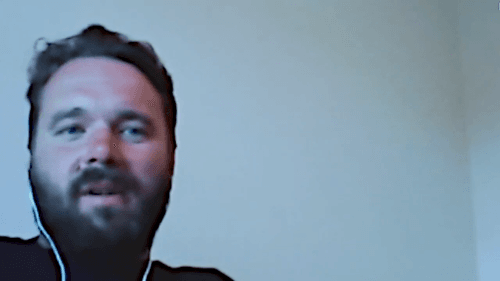
Suter (Betroffener)
Mr. Suter had a subarachnoid haemorrhage in January 2020. The symptoms started at the company party when he was in the bathroom. He immediately realised that something was wrong and called his partner. When the ambulance arrived, he was still responsive but suffered from a hearing loss and kept vomiting. Overall, he made a very good recovery, although it was only in retrospect that he realised how bad he was during the acute phase. Mr. Suter was 38 years old at the time of the event and worked as a carpenter. He lived with his partner and his daughter, who was 5 at the time of the incident. A year after the haemorrhage, he was doing so well that he pursued his dream and started his own business as a carpenter. The haemorrhage taught him that life can end at any time. Since then, he has taken everyday problems less seriously. He handles difficult situations with a great deal of humour and by trying not to overthink everything. The interview took place online in May 2021 under a very poor connection, which is why there are repeated interruptions of words and delays.
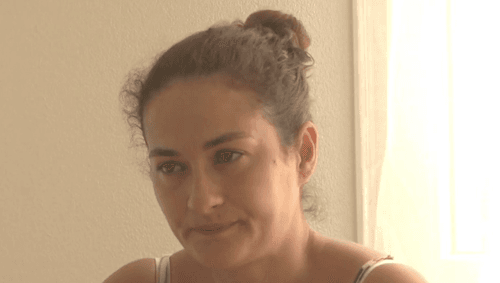
Soldo (Angehörige, Tochter)
At the age of 53, Ms. Soldo had a subarachnoid haemorrhage. She was living with her son's family and lost consciousness in October 2019 while caring for her grandchildren. Her daughter-in-law immediately called the neighbour for help and made an emergency call. The ambulance arrived very quickly. Since the diagnosis of a brain haemorrhage was also established very quickly, Ms. Soldo was flown to the central hospital within a short time. Although the time between the incident and the first operation was very short, she suffered many complications. After the operation, she continued to bleed and part of the skull bone had to be removed. At the beginning, she was paralysed all over her body. With time, she learned to react to stimuli again, pulled her arms back and was able to move her fingers when asked. After the reinsertion (reimplantation) of the skull bone, blood accumulated in her head and she had to undergo another operation. Since this operation, she had been completely paralysed. At the time of the interview with her daughter, Ms. Soldo had been living in a nursing home for over a year. She was in need of constant care and was mobilised into a wheelchair once a week by the nursing service. As we learned from contact with the daughter, Ms. Soldo died two months after the interview. Ms. Soldo was divorced, had two adult children and worked in the catering industry. Her mother tongue was Bosnian. In her free time, she cared for her family and looked after her garden. The interview took place with the daughter of the patient. The day before the bleeding incident, the daughter gave birth to her second child. She was overwhelmed by the challenge of caring for two infants and her own mother, who was in a coma in intensive care unit. Even though she knew her mother's will not to want to live in a wheelchair, she advocated for full therapy. In retrospect and under the experience of this very long history of suffering, Ms. Soldo (daughter of the affected person) regrets some medical decisions. Ms. Soldo (daughter of the affected person) is married, has two children and works as a childcare professional in a day-care centre. She became her mother's legal guardian and made every decision in consultation with her brother. The interview took place on two dates as we had technical problems on the first one. The second appointment took place in August 2021 at the daughter's home. As her children had visitors, it is very lively in the background.
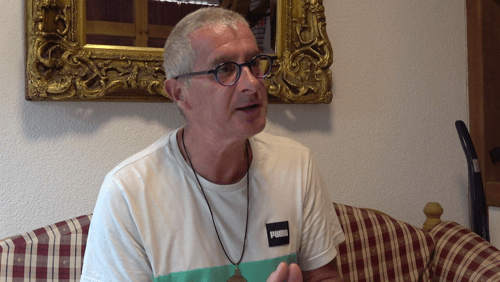
Keller (Betroffener und Angehöriger, Sohn)
At the time of the interview, Mr Keller was 60 years old, married and the father of two adult children. His life story has been profoundly shaped by a severe traumatic brain injury he sustained in a car accident at the age of 23. After coming out of a coma, he awoke feeling deeply exhausted, with difficulty concentrating and completely dependent on others. This period was emotionally draining for him – he lost his zest for life and his relationship at the time, and had to relearn basic skills. A turning point in his life was meeting his current wife, through whom he found a new purpose in life. In the decades that followed, he immersed himself in the study of brain function, which was not only part of his personal healing process but also led to a strong commitment to the cause. Today, Mr Keller is involved in an organisation for people with brain injuries. There, he draws on his own experiences and, among other things, organises a Nordic walking group that helps those affected to remain physically active and maintain social contacts. Another life-changing event was his father’s stroke in 2020 – in the midst of the COVID-19 pandemic lockdown. Despite the visiting restrictions in place, Mr Keller decided to support his father using all his own experiences. He visited him regularly and actively helped with his mobility – for example, with the transition from a wheelchair to walking. At the time of the interview, his father, now 88 years old, was living in his own flat again, albeit with certain limitations. The interview with Mr Keller took place at his home in 2023.
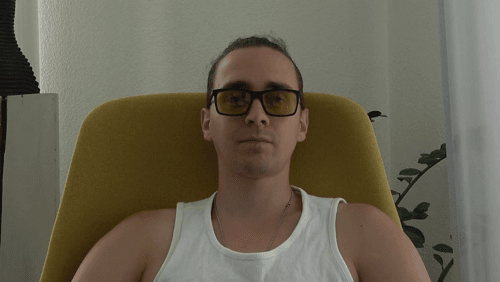
López (Betroffener)
At the age of 23, Mr López suffered a brain haemorrhage. He woke up with a severe headache, managed to call in sick and dial the emergency services before losing consciousness. Following the operation, he spent a month in intensive care, followed by stays in a rehabilitation clinic, an acute psychiatric ward and supported housing. There, he is relearning basic skills such as walking, washing and shopping. The brain injury has damaged his optic nerve, leaving him with only around 5% of his vision; he perceives his surroundings as if through frosted glass. In supported housing for people with brain injuries and visual impairments, he has gained a degree of independence. At the time of the interview, he lives in his own flat and is accompanied by a guide dog. Severe memory problems, including blackouts (moments of mental absence) during therapy sessions or on public transport, made intensive support necessary. He received various therapeutic approaches, including neuropsychological therapy, the exercises for which he continues daily. His visual impairment has also led to dangerous situations – on one occasion, he fell during a tram accident. Before his brain injury, Mr López worked as a cash-in-transit driver, amongst other things. He cannot return to that life. He lives on disability benefits and an inheritance. His daily routine consists of long walks with his dog, working out at the gym and swimming. Family and friends play an important role. Through his ordeal, he found faith and built a stable environment for himself within a Christian community, which offers him support and social contact. In the interview, he talks about how he manages his shopping, receives support with bureaucratic tasks, and his goal of growing old. The interview took place on the university premises. At the time of the interview, Mr López was 29 years old.
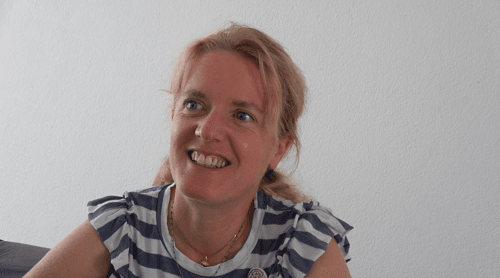
Bernard (Betroffene)
At the age of 39, Ms Bernard suffered a cardiac arrest and had to be resuscitated several times. The temporary lack of blood flow to her brain resulted in a severe brain injury, accompanied by significant memory loss. She no longer remembers her life before the incident. As a result, she not only had to relearn basic skills but also get to know her own family all over again – and in the process fell in love with her husband all over again. To this day, her ability to learn new things and remember them remains limited. Due to an existing heart condition, she continues to require regular medical care. Following the cardiac arrest, Ms Bernard spent several weeks in intensive care and underwent eight months of rehabilitation. She benefited particularly from neuropsychological therapy. She emphasises how important her therapist’s honest and respectful communication was to her. As a result of the brain injury, she was unable to return to her job. Instead, she is now involved in a gardening group, regularly attends Nordic walking sessions organised by a self-help group for people with brain injuries, and looks after elderly people who are living alone. She sees her current life as an opportunity for a fresh start. In the interview, Ms Bernard explains that she sometimes does not understand the meaning of words and that those around her occasionally react inappropriately as a result. When it comes to important medical decisions, she is accompanied by her family, who support her in making decisions as independently as possible. Before her brain injury, Ms Bernard worked as a PhD-qualified agricultural researcher. Looking back, she reports that she ignored signs of severe burnout: sleep disturbances, headaches, stomach aches, anxiety, social withdrawal and hardly any time for breaks. There was no time to see a doctor. At the time of the interview, Ms Bernard was 45 years old and lived with her family. The interview took place at her home.
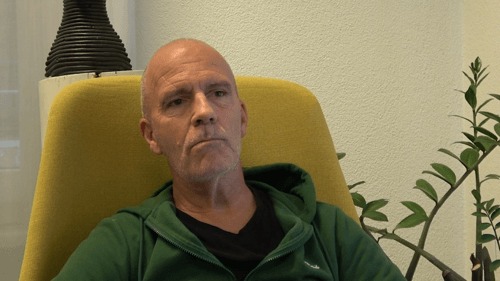
Steiner (Betroffener)
At the age of 52, Mr Steiner suffered a stroke. When he went to the toilet one night, he realised that his leg was paralysed, he could no longer walk properly and he had to vomit. His ex-partner called an ambulance immediately. In hospital, he suffered a second stroke, which caused severe word-finding difficulties. Mr Steiner has few memories of the acute phase of his illness and the subsequent rehabilitation. The cause was probably a rare blood disorder affecting the coagulation system. During rehabilitation, he had to relearn how to walk: first in a wheelchair, then with a walking frame. He continues to suffer from balance problems, but was able to learn to ride a bike again. After four months, he completed his rehabilitation stay. His speech was severely impaired, so with the help of speech therapy, he invested a lot of time in speech exercises and reading aloud. He continues to attend physiotherapy as he repeatedly suffers from muscle spasms. He has also had to relearn everyday tasks such as using his mobile phone or going shopping. Sometimes he finds it difficult to find his way around the supermarket. Taking beta-blockers further restricts his sporting activities. Even after seven years, his physical and speech abilities remain highly dependent on how he feels on any given day. Mr Steiner has a living will because he is certain that he does not wish to continue living in a vegetative state. The will is held by his sister, who also supports him with administrative tasks. He is aware of how stressful it can be for relatives to care for a loved one in a drastically altered state and in a life-threatening situation. Professionally, Mr Steiner worked as a stage performer and comedian. When attempting to return to the stage, he realised that not only was his speech impaired, but the long recovery periods were also no longer compatible with the stage programme. Sport had always been important to him, but here too he had to make compromises. The interview took place seven years after the incident on the university premises. At that time, Mr Steiner was living in a flat in the city and receiving disability benefit.
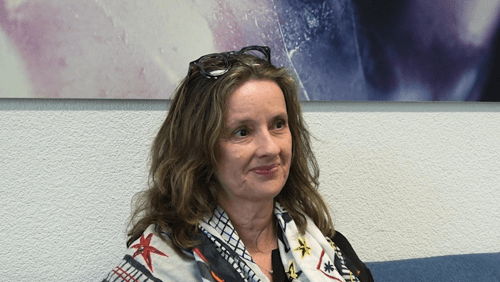
Huber (Betroffene)
At the age of 50, Mrs Huber developed a melanoma at the back of her head, caused by malignant melanoma. At first, she thought the symptoms were simply a stiff neck. The symptoms worsened: nausea, ravenous hunger and increasing headaches. Following a misdiagnosis at the A&E department, imaging was only carried out after her second visit to the doctor. This revealed a 5 cm tumour, which required emergency surgery. The operation was delayed due to her medication, so she was kept under observation for a few days. During her stay in hospital, she was acutely aware of her surroundings and remained positive despite everything. She appreciated the support of her family and the care of a nurse when she suddenly became anxious. Mrs Huber is married, has two children and a dog. Before the operation, her husband tried to discuss possible decisions with her; she now has a living will. The operation went well, yet some limitations remained: reduced function in her left hand, a restricted field of vision, and problems with temporal and spatial orientation. She declined a stay at the rehabilitation clinic and wanted to put the matter behind her. The limitations still make her angry to this day, especially when she cannot carry out tasks as she used to. She developed strategies for everyday life, such as having a maximum of one appointment per half-day and preparing the evening before. When dealing with her family, she sometimes wishes she had her former patience back. Before her illness, she worked as a speech therapist specialising in reading, maths and writing difficulties and also had training in graphic and web design. However, returning to work quickly revealed her limitations, meaning she now has to consider applying for a disability pension. At the time of the interview, Ms Huber was 54 years old. The interview took place at the University of Zurich.
© 2000-2021, All Rights Reserved