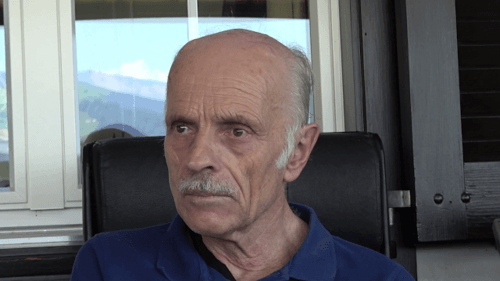
Maurice F.
Parkinson's disease
Age 72
Maurice F. was diagnosed with Parkinson's disease in 1997. In 2014/2015, he gave up his professional activity in the field of forest projects and forest surveys, which is not easy for him. At the time of the interview, he has been living with Parkinson's disease for twenty-three years. In 2010, he received the Duodopa® pump, the effect of which he has found to be positive. In 2019, he started Deep Brain Stimulation therapy, from which, at the time of the interview, he felt no improvement in symptoms. Age at the time of diagnosis: 49 Treatment: Duodopa® pump and deep brain stimulation
experiences
Maurice F.
Slowdown of movement
Maurice F. can no longer run so fast.
Symptoms and course of disease
Maurice F.
Suicidal thoughts
Maurice F. experiences suicidal thoughts suddenly appearing.
Symptoms and course of disease
Maurice F.
Adapt the processes
Maurice F. has to adapt his usual routines and can no longer perform certain activities.
Living with Parkinson's disease
Maurice F.
Shame
Maurice F. is ashamed of the excess movements.
Living with Parkinson's disease
Maurice F.
Driving a car
For Maurice F., autonomy means that he can still drive a car.
Living with Parkinson's disease
Maurice F.
Miss something
Maurice F. often has to withdraw when his grandchildren are around and has the feeling that he is missing something.
Family and society
Maurice F.
Placement of a nasal tube
Maurice F. describes how he experienced the insertion of the nasal tube.
Treatment with the Duodopa® pump
Maurice F.
Less medication
Maurice F. no longer has to think about taking medication.
Treatment with the Duodopa® pump
Maurice F.
Regulation of muscle stiffness
Maurice F. can regulate the muscle stiffness in the morning well with the pump.
Treatment with the Duodopa® pump
Maurice F.
Weight
Maurice F. can cope with the weight of the pump.
Treatment with the Duodopa® pump
Other experiences

Roswitha S.
Roswitha S. notices from small changes that something has changed in her, but cannot interpret the symptoms. In 2004, she was diagnosed with Parkinson's disease and started a square dance class with her husband shortly afterwards. She finds the dancing extremely helpful in relation to the Parkinson's disease. At the time of the interview, she had been living with the disease for sixteen years. In 2017, she started Deep Brain Stimulation therapy. In the time before treatment, she was very unwell and sees Deep Brain Stimulation as a last resort. At the time of the interview, the surgery was seven years ago. Even before receiving the diagnosis of Parkinson's disease, Roswitha S. had quit her job as a biology teacher. Age at the time of diagnosis: 52 Treatment: Deep brain stimulation
Joachim T.
Joachim T. was diagnosed with Parkinson's disease in 2018. At the time of the interview, he has been living with the disease for two years. In 2019, he started Deep Brain Stimulation therapy, which was one year ago at the time of the interview. Before the surgery, he was very unwell and could hardly move. Now, one year later, he is doing much better and feels quality of life again. Age at the time of diagnosis: 71 Treatment: Deep brain stimulation
Vreni M.
Vreni M. has a husband who suffers from Parkinson's disease. Due to her husband's illness, she gives up her practice as a psychotherapist one year after the diagnosis, but continues to work on a limited basis for a longer period of time. Maintaining her "own" life is very important to her in the context of her role as a family carer. She goes to a support group for relatives of people with PD, which helps her a lot. Profession: Psychotherapist
Jeanette F.
Jeanette F. is married to Maurice F., who has Parkinson's disease. Although she experiences herself as a cheerful person who takes things as they are, it is nevertheless difficult for her to see her husband suffering. The social withdrawal that goes hand in hand with Maurice F.'s Parkinson's disease also troubles her sometimes.
Marie V.
Marie V. was diagnosed with Parkinson's disease in 1997 and has been living with the condition for twenty-three years. Before she starts Deep Brain Stimulation therapy in 2012, she suffers severely from hypermobility. At the time of the interview, the Deep Brain Stimulation surgery was eight years ago. She is a member of a self-help group, which helps her a lot in dealing with the disease. Age at the time of diagnosis: 51 Treatment: Deep brain stimulation
Mariella C.
Mariella C. was diagnosed with PD in 1999 and has been living with the disease for twenty-two years at the time of the interview. When she is diagnosed with PD, her three children are already grown up, which she is very happy about. After the tremors become too severe two years after receiving the diagnosis, she gives up her job as an asylum officer in her community. In 2015, she started Deep Brain Stimulation therapy. Deep brain stimulation was five years ago at the time of the interview. Age at the time of diagnosis: 51 Treatment: Deep brain stimulation
Urs C.
Urs C. is married to Mariella C., who has Parkinson's disease and is being treated with deep brain stimulation. He is glad that his wife still actively participates in social life and has created her own tasks after leaving her job. Urs C. also sees positive aspects of Mariella C.'s illness, especially that the cohesion in the family has become stronger since then. He makes sure that he has space in his everyday life where he can pursue his own interests and needs.
Paul D.
Paul D. is at the peak of his career as general secretary of a bank when he receives a diagnosis of Parkinson's disease in 2011. He receives the diagnosis, which is preceded by incorrect treatment, by post. Exercise is important to Paul D.; among other things, he does cardio and strength training at the fitness centre. He also practices and teaches various dances. At the time of the interview, he has been living with the disease for nine years. In 2017, he started deep brain stimulation therapy, which was three years ago at the time of the interview. As a hobby, he is very busy on the computer. Age at the time of diagnosis: 50 Treatment: Deep brain stimulation
Alma H.
Alma H. was diagnosed with Parkinson's disease in 2007 and has been living with the disease for thirteen years at the time of the interview. After receiving the diagnosis, she has lived for several years without too many restrictions. In addition to the physical changes, she also feels that her personality has changed since she was diagnosed with PD. In 2017, she received the Duodopa® pump and has been living with it for three years. Age at the time of diagnosis: 63 Treatment: Duodopa® pump
Thaddeus H.
Thaddeus H. is married to Alma H., who was diagnosed with Parkinson's disease in 2007. Since he and Alma H. were physically very active and on the go a lot before the disease, the Parkinson's disease has brought about a big change in their previous life. Taddeus H. takes over many of the necessary household tasks. Apart from help for major cleaning, he does not want any other support, because as an independent entrepreneur he is used to doing things on his own. The cohesion in the family has become stronger since Alma H. fell ill, which means a lot to Thaddeus H.
Pierro L.
Pierro L. worked as an administrative assistant. He was diagnosed with Parkinson's disease in 2000 and has been living with the disease for twenty years at the time of the interview. In 2013, he received the Duodopa® pump. At the time of the interview, the treatment was seven years ago. Age at the time of diagnosis: 49 Treatment: Duodopa® pump
Lucie L.
Lucie L. is married to Pierro L., who was diagnosed with Parkinson's disease in 2000. Treatment: Duodopa® pump
Tanja U.
Tanja U. has a father who suffers from Parkinson's disease. When she learns about her father's illness, she is already an adult and reacts calmly, also because her father still has few symptoms at this time. She does not see her father very often and when she does, it is rather brief. That is why she does not notice some things about Parkinson's disease. After the start of deep brain stimulation, she remembers her father's manic phases in particular, which then subsided.
Ester O.
Ester O.'s husband has Parkinson's disease. Everyday life in the family becomes increasingly difficult as her husband's illness progresses. Above all, hallucinations, aggression and impulse control disorders cause difficulties. In the meantime, Ester O.'s husband lives in a nursing home. Age at the time of the interview: 64
Luca M.
Luca M. was diagnosed with Parkinson's disease in 1996 and has been living with the disease for twenty-four years at the time of the interview. He worked full time as a chemist until 2003, after which he reduced his workload. During this time, he takes care of the house and garden and travels. In 2013, he started deep brain stimulation therapy. He is satisfied with the results. At the time of the interview, the treatment was seven years ago. Age at the time of diagnosis: 51 Treatment: Deep brain stimulation
Nadja W.
Nadja W. was diagnosed with Parkinson's disease in 2000 and has been living with the disease for twenty years at the time of the interview. She was no longer working as a service worker at the time of diagnosis. In 2015, she received the Duodopa® pump, which was five years ago at the time of the interview. Nadja W. struggles with sudden changes in mood and then withdraws. Nevertheless, she tries to think positively and has devoted more time to new activities, such as knitting, since the onset of Parkinson's disease. After a fall that resulted in a fracture of the neck of the femur, Nadja W. moved to a nursing home where she has lived for three years. Age at the time of diagnosis: 60 Treatment: Duodopa® pump
Filippo F.
Filippo F. was diagnosed with Parkinson's disease in 2004. He practises his profession as an electrician until the age of 62. When he gets better after a difficult phase, his wife starts working in the evenings. At the time of the interview, he has been living with the disease for twenty-six years. In 2018, he started deep brain stimulation therapy. The disease has changed his relationship with his children, which hurts him. At the time of the interview, the treatment was two years ago. Age at the time of diagnosis: 59 Treatment: Deep brain stimulation
Seraina F.
Seraina F. is married to Filippo F., who was diagnosed with Parkinson's disease in 2004. When she starts working in the evenings, organising Filippo F.'s care is not an easy task at the beginning. After various family members contribute a part to the care, the situation settles down, which Seraina F. is very happy about.
Katharina M.
Katharina M. is married to Luca M., who has Parkinson's disease. After the operation for deep brain stimulation, she notices manifold improvements in Luca M.'s symptoms. The disease and its acceptance is not always easy for her.
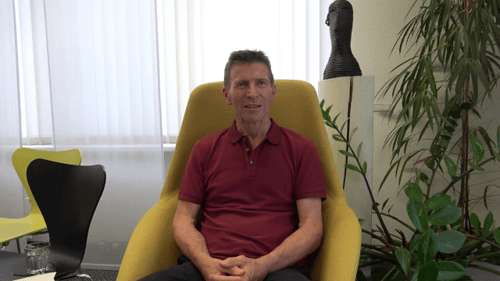
Theo I.
Theo I. was diagnosed with Parkinson's disease at the age of 42. Together with Salome G.-I., he has two small children at this time. Due to the slow progression of Parkinson's disease, he does not have to change his usual lifestyle from one day to the next and can still fulfil family duties, such as childcare. At the time of the interview, he has been living with the disease for twenty-three years. Theo I. works as an organisational consultant. Sport and exercise play a central role in his life. In 2018, he started deep brain stimulation therapy. Age at the time of diagnosis: 42 Treatment: Deep brain stimulation Occupation: Office worker Treatment: Deep brain stimulation
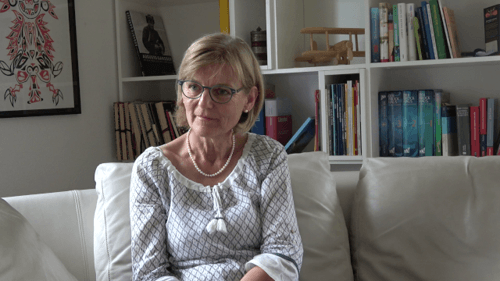
Salome G.-I.
Salome G.-I. is a teacher by profession and married to Theo I.. Shortly after the birth of her second child, Salomé G.-I. learns of his diagnosis of Parkinson's disease. She is glad that Theo I.'s disease is progressing slowly and that they can still pursue their activities together. After Theo I.'s Parkinson's symptoms became increasingly severe over the years, Salome G.-I. is very happy that her husband had deep brain stimulation performed. She considers the result a great success. Age at the time of diagnosis: 38
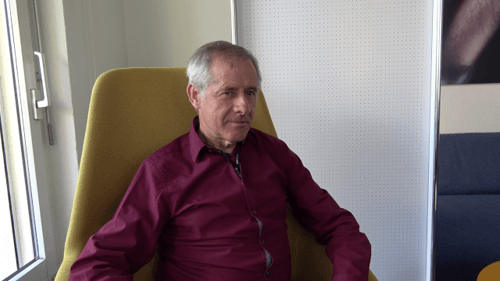
Uli F.
Uli F. was diagnosed with Parkinson's disease in 2001 at the age of 49. At that time, he is very athletic and works in an office. At the time of the interview, he has been living with the disease for nineteen years. In 2014, he started Deep Brain Stimulation therapy, which was six years ago at the time of the interview. Shortly after the deep brain stimulation, he took early retirement due to Parkinson's disease and a back problem. It is important for him to be open about his Parkinson's disease. Age at the time of diagnosis: 49 Treatment: Deep brain stimulation
Mario T.
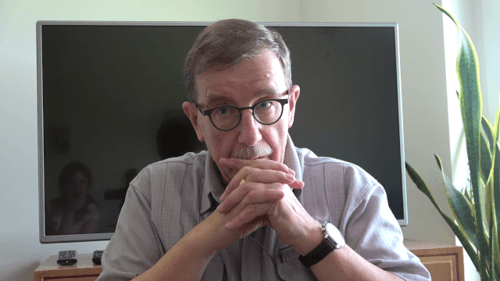
Mario T. was diagnosed with Parkinson's disease in 2000, a time when he was working as an office worker. For him, Parkinson's disease is accompanied by a strong feeling of loss of freedom, which is very painful for him. In his family, his mother was also affected by Parkinson's disease. Mario T. has been living in a nursing home for two and a half years. At the time of the interview, he has been living with the disease for twenty years. In 2015, he started deep brain stimulation therapy, which was five years ago at the time of the interview. Age at the time of diagnosis: 51 Treatment: Deep brain stimulation
Dennis O.
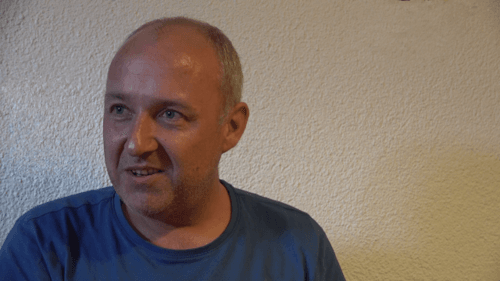
Dennis O.'s father has Parkinson's disease. Age at the time of the interview: 44
Maja G.
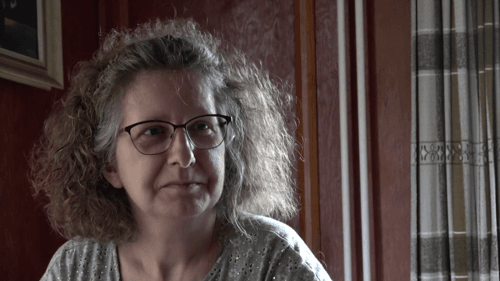
Maja G. was diagnosed with Parkinson's disease in 2003 and has been living with the disease for seventeen years at the time of the interview. She is employed until 2018. After her work in computer technology, for which she needs a lot of sensitivity in her fingers, she cleans offices in order not to be completely without employment. In 2019, she underwent the surgical procedure for Deep Brain Stimulation. At the time of the interview, the surgery was a year ago. Maja G. is rather disappointed with the deep brain stimulation; she had hoped for a stronger improvement in her symptoms. Animals are important to Maja G. and the worst restriction for her is that she can no longer ride. Due to the Parkinson's disease, she has started painting. Age at the time of diagnosis: 38 Treatment: Deep brain stimulation
Corinne L.
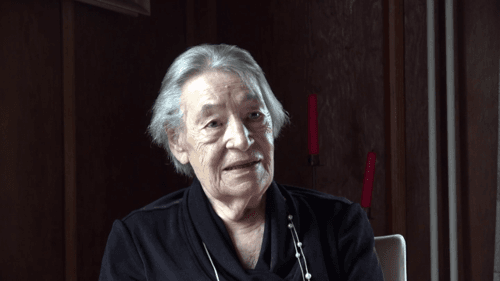
Corinne L. is the mother-in-law of Maja G., who has Parkinson's disease. The young age at which her daughter-in-law has Parkinson's disease greatly concerns Corinne L.. On the other hand, she is glad that Maja G. will be able to work for another 10 years. Age at the time of the interview: 75
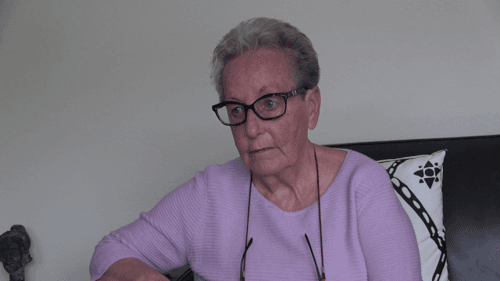
Kerstin E.
Kerstin E. was diagnosed with Parkinson's disease in 2002 and has been living with the disease for eighteen years at the time of the interview. Certain reactions of other people are often difficult for Kerstin E. to bear. Because she knows that exercise is important in PD, she makes sure that she moves every day. Kerstin E.'s work consists of conducting surveys. Due to the increasingly digital form of surveys, she can continue her work until retirement. In 2015, Kerstin E. started deep brain stimulation therapy. The treatment was five years ago at the time of the interview. Kerstin E. is very grateful for the support of her family. Age at the time of diagnosis: 55 Treatment: Deep brain stimulation
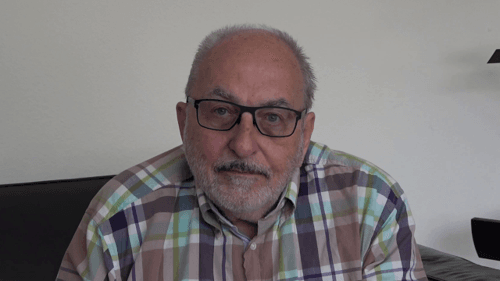
Noah E.
Noah E. is married to Kerstin E., who has Parkinson's disease. He finds the unpredictability in everyday life that his wife's Parkinson's disease often means and the accompanying loss of spontaneity difficult. Noah E. finds that Kerstin E.'s character has changed since she became ill with Parkinson's disease, which also leads to conflicts in the relationship. As an architect, he can often arrange his working hours freely, which enables him to take more care of the household. For this and for the care of Kerstin E., he has also sought professional support.
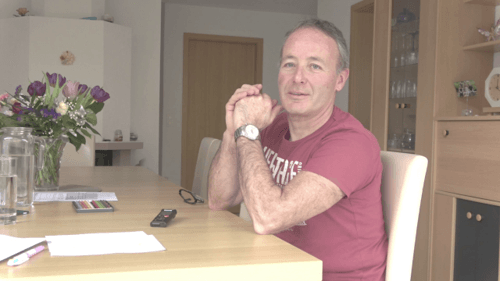
Alain G.
Alain G. was diagnosed with Parkinson's disease in 2010 at the age of 44. The diagnosis is a shock for him. He refuses to accept the situation for several years and does not want to talk or hear about it. Since he works a lot with his arms as a tinsmith and needs strength, the disease leads to restrictions in his professional activities. At the time of the interview, he has been living with the condition for ten years. In 2018, he started Deep Brain Stimulation therapy. At the time of the interview, the surgery was two years ago. Alain G. is moderately satisfied with the results of the treatment. Age at the time of diagnosis: 44 Treatment: Deep brain stimulation
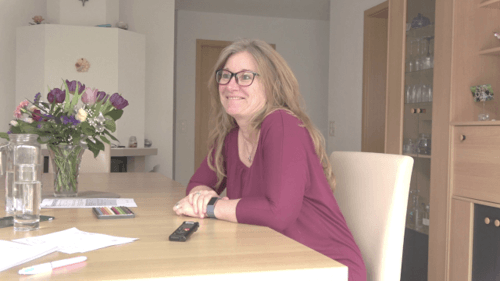
Céline G.
Céline G. is married to Alain G., who was diagnosed with Parkinson's disease in 2010. The time before receiving the diagnosis, Céline G. experiences as very challenging and marked by uncertainty and fears. Alain G.'s social withdrawal and the changes in his mood and personality are things that concern Céline G..
© 2000-2021, All Rights Reserved