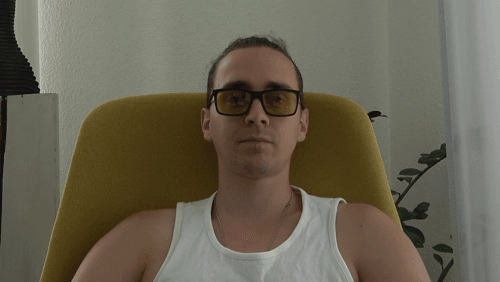
López (Betroffener)
At the age of 23, Mr López suffered a brain haemorrhage. He woke up with a severe headache, managed to call in sick and dial the emergency services before losing consciousness. Following the operation, he spent a month in intensive care, followed by stays in a rehabilitation clinic, an acute psychiatric ward and supported housing. There, he is relearning basic skills such as walking, washing and shopping. The brain injury has damaged his optic nerve, leaving him with only around 5% of his vision; he perceives his surroundings as if through frosted glass. In supported housing for people with brain injuries and visual impairments, he has gained a degree of independence. At the time of the interview, he lives in his own flat and is accompanied by a guide dog. Severe memory problems, including blackouts (moments of mental absence) during therapy sessions or on public transport, made intensive support necessary. He received various therapeutic approaches, including neuropsychological therapy, the exercises for which he continues daily. His visual impairment has also led to dangerous situations – on one occasion, he fell during a tram accident. Before his brain injury, Mr López worked as a cash-in-transit driver, amongst other things. He cannot return to that life. He lives on disability benefits and an inheritance. His daily routine consists of long walks with his dog, working out at the gym and swimming. Family and friends play an important role. Through his ordeal, he found faith and built a stable environment for himself within a Christian community, which offers him support and social contact. In the interview, he talks about how he manages his shopping, receives support with bureaucratic tasks, and his goal of growing old. The interview took place on the university premises. At the time of the interview, Mr López was 29 years old.
VIDEO
An active daily life and a zest for life
Mr López spends a lot of time out and about with his guide dog every day and describes his daily life as fun. He decided against a supported sheltered workshop as he didn’t enjoy it.
Video Interview
TRANSCRIPT
Related experiences
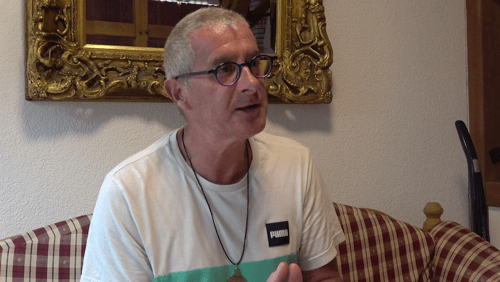
Keller (Betroffener und Angehöriger, Sohn)
"I feel more alert today"
Mr Keller has studied brain injuries and their consequences in depth. Some 30 years after his accident, he says he feels ‘more alert’ because new neural connections have formed.
Challenges after brain damage
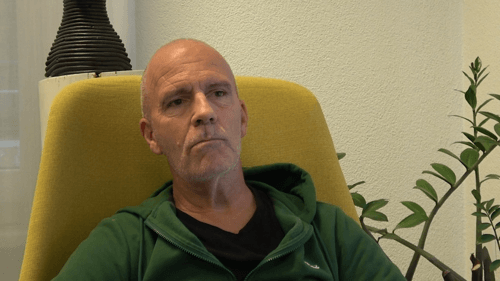
Steiner (Betroffener)
Mr Steiner measures his quality of life against an imaginary benchmark
Mr Steiner looks back on a life as an artist in which he has had a great deal of fun. He describes his current quality of life as relatively good. He has learnt that bad days are always followed by good ones.
Challenges after brain damage
Other experiences by López (Betroffener)
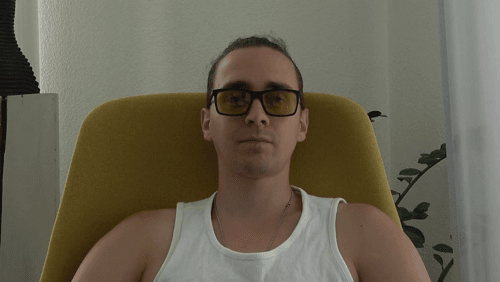
López (Betroffener)
At the age of 23, Mr López suffered a brain haemorrhage. He woke up with a severe headache, managed to call in sick and dial the emergency services before losing consciousness. Following the operation, he spent a month in intensive care, followed by stays in a rehabilitation clinic, an acute psychiatric ward and supported housing. There, he is relearning basic skills such as walking, washing and shopping. The brain injury has damaged his optic nerve, leaving him with only around 5% of his vision; he perceives his surroundings as if through frosted glass. In supported housing for people with brain injuries and visual impairments, he has gained a degree of independence. At the time of the interview, he lives in his own flat and is accompanied by a guide dog. Severe memory problems, including blackouts (moments of mental absence) during therapy sessions or on public transport, made intensive support necessary. He received various therapeutic approaches, including neuropsychological therapy, the exercises for which he continues daily. His visual impairment has also led to dangerous situations – on one occasion, he fell during a tram accident. Before his brain injury, Mr López worked as a cash-in-transit driver, amongst other things. He cannot return to that life. He lives on disability benefits and an inheritance. His daily routine consists of long walks with his dog, working out at the gym and swimming. Family and friends play an important role. Through his ordeal, he found faith and built a stable environment for himself within a Christian community, which offers him support and social contact. In the interview, he talks about how he manages his shopping, receives support with bureaucratic tasks, and his goal of growing old. The interview took place on the university premises. At the time of the interview, Mr López was 29 years old.
López (Betroffener)
My head is about to explode
Mr López called in at work to say he was off sick before he lost consciousness.
Experience of disease
Brain damage
López (Betroffener)
Communication barriers and impairments in perception
Mr López lost his sight as a result of a brain haemorrhage. In the interview, he explains that he was unable to communicate his loss of sight. Photographs from the acute phase show him in bed with a book – an image that contrasts with his actual perception. This experience highlights the profound discrepancy between external appearance and internal experience. Sensory limitations and communication barriers can be challenging in the early stages of neurological disorders.
Experience of disease
Brain damage
López (Betroffener)
Suicidal thoughts led to him being admitted to a psychiatric ward
Mr López was assessed as being at risk of suicide on two occasions during the subacute phase of his illness. The first incident occurred when he attempted to harm himself by cutting his wrist. On the second occasion, he actively sought information about options for assisted dying. In both cases, he was compulsorily admitted to a psychiatric hospital. Looking back, Mr López makes it clear that he never wants to be admitted to a psychiatric ward again.
Procedure after brain damage
Brain damage
López (Betroffener)
First meeting with the guide dog
Mr López explains how he came to have a guide dog after losing his sight.
Procedure after brain damage
Brain damage
López (Betroffener)
Support with administrative challenges
Mr López receives support with administrative tasks that he has found difficult since his brain injury. These include sorting through the post, filling in forms and completing his tax return. This support enables him to manage important everyday tasks and live independently.
Procedure after brain damage
Brain damage
López (Betroffener)
Mr López kept having blackouts on public transport
Due to recurring blackouts (moments of mental absence), Mr López regularly missed his stops on public transport. Through targeted neuropsychological therapy, he learned to navigate public transport independently once again. The therapy mainly consisted of structured computer-based exercises that improved his sense of direction and attention, helping him to feel more confident in his daily life.
Procedure after brain damage
Brain damage
López (Betroffener)
Mr López lost his sight permanently – but he learned to walk again
When Mr López arrived at the rehabilitation clinic, he was in a wheelchair. He often felt dizzy and could only remember things for a very short time. The severe dizziness made him feel sick and caused him to vomit. As a result, he lost a lot of weight. During his rehabilitation, he learnt to walk again and to train his memory. Unfortunately, his optic nerve, which had been damaged by the brain haemorrhage, was permanently impaired.
Procedure after brain damage
Brain damage
López (Betroffener)
"I don't remember any of that at all"
Mr López has no recollection of the acute phase or of any conversations with the medical staff. He knows about his behaviour and what happened only from what his relatives have told him.
Decision-making
Brain damage
López (Betroffener)
His mother wanted him to draw up a living will.
At his mother’s request, Mr López drew up a living will, as he had already been in a life-threatening situation twice. For him, the living will is a simple form to fill in that provides clarity for his family.
Decision-making
Brain damage
López (Betroffener)
“I have dedicated my life to God”
During the acute phase of his illness, Mr López experienced bouts of panic. In his mind, he prayed incessantly until, suddenly, a sense of calm descended and he felt a connection with God. Since then, he has felt a deep connection to his faith.
Faith, religion, and spirituality
Brain damage
López (Betroffener)
"I always ask God first how I should go about it."
Mr López has deep faith in his beliefs. Before making decisions, he asks God for guidance and then decides what is best for him.
Faith, religion, and spirituality
Brain damage
López (Betroffener)
Making the impairment visible
Mr López was involved in a road traffic accident due to his visual impairment. He assumed that other people would realise he had a visual impairment. Since the accident, he has always carried a white cane – a white stick used as an aid by people with visual impairments – so that people can see he has poor eyesight.
Lessons and strategies
Brain damage
López (Betroffener)
Acceptance and exercise
Mr López has learnt to accept his situation. This acceptance helps him cope with the fact that his brain injury sometimes leaves him confused. As a result, he is now able to laugh at himself. Exercise is also good for him. He is particularly pleased to have found a trainer who relies on a guide dog himself.
Lessons and strategies
Brain damage
López (Betroffener)
The brain hemorrhage caused damage to the optic nerves
Mr López can only make out outlines – as if looking through frosted glass.
Challenges after brain damage
Brain damage
López (Betroffener)
Driving lessons for blind and visually impaired people
Driving has always been a great passion of Mr López’s, and before his accident it was also his profession, which he practised as a transport driver. To regain his confidence behind the wheel following his loss of vision, he took part in a driving course for blind and visually impaired people.
Challenges after brain damage
Brain damage
López (Betroffener)
An active daily life and a zest for life
Mr López spends a lot of time out and about with his guide dog every day and describes his daily life as fun. He decided against a supported sheltered workshop as he didn’t enjoy it.
Challenges after brain damage
Brain damage
© 2000-2021, All Rights Reserved