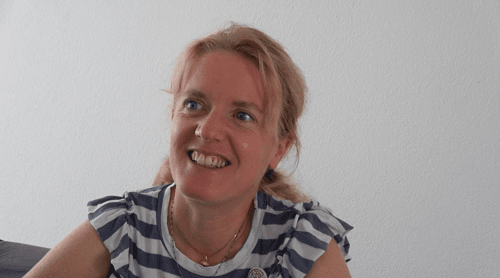
Bernard (Betroffene)
At the age of 39, Ms Bernard suffered a cardiac arrest and had to be resuscitated several times. The temporary lack of blood flow to her brain resulted in a severe brain injury, accompanied by significant memory loss. She no longer remembers her life before the incident. As a result, she not only had to relearn basic skills but also get to know her own family all over again – and in the process fell in love with her husband all over again. To this day, her ability to learn new things and remember them remains limited. Due to an existing heart condition, she continues to require regular medical care. Following the cardiac arrest, Ms Bernard spent several weeks in intensive care and underwent eight months of rehabilitation. She benefited particularly from neuropsychological therapy. She emphasises how important her therapist’s honest and respectful communication was to her. As a result of the brain injury, she was unable to return to her job. Instead, she is now involved in a gardening group, regularly attends Nordic walking sessions organised by a self-help group for people with brain injuries, and looks after elderly people who are living alone. She sees her current life as an opportunity for a fresh start. In the interview, Ms Bernard explains that she sometimes does not understand the meaning of words and that those around her occasionally react inappropriately as a result. When it comes to important medical decisions, she is accompanied by her family, who support her in making decisions as independently as possible. Before her brain injury, Ms Bernard worked as a PhD-qualified agricultural researcher. Looking back, she reports that she ignored signs of severe burnout: sleep disturbances, headaches, stomach aches, anxiety, social withdrawal and hardly any time for breaks. There was no time to see a doctor. At the time of the interview, Ms Bernard was 45 years old and lived with her family. The interview took place at her home.
VIDEO
"At first, I sometimes didn’t realise that I wasn’t capable of it."
At the onset of her illness, Mrs Bernard did not realise that she was unable to make decisions. Since becoming aware of this, she has been weighing up her decisions carefully.
Video Interview
TRANSCRIPT
Related experiences
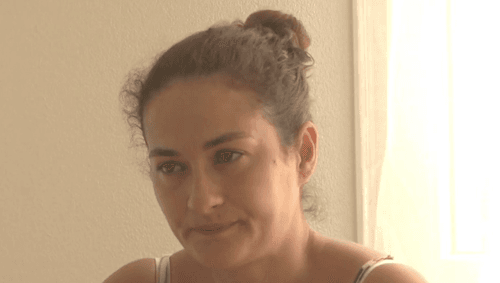
Soldo (Angehörige, Tochter)
The induced coma
After the operation, the patient had to be put into a coma again because of post-operative bleeding. Artificial sleep allows painful treatments to be carried out and stress to be reduced. However, those affected cannot express their wishes and needs in this state.
Decision-making

Novak (Betroffene)
Uncertainties after the operation
It is common for surgeons to talk to their patients after the operation about the course of the procedure. The interview excerpt shows that Ms. Novak needed several days to understand the reason for the intensive care stay. The statement about the examinations also shows a lot of uncertainty, which points to a limited ability to remember and think.
Decision-making
Other experiences by Bernard (Betroffene)
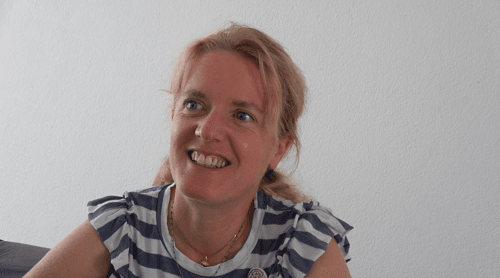
Bernard (Betroffene)
At the age of 39, Ms Bernard suffered a cardiac arrest and had to be resuscitated several times. The temporary lack of blood flow to her brain resulted in a severe brain injury, accompanied by significant memory loss. She no longer remembers her life before the incident. As a result, she not only had to relearn basic skills but also get to know her own family all over again – and in the process fell in love with her husband all over again. To this day, her ability to learn new things and remember them remains limited. Due to an existing heart condition, she continues to require regular medical care. Following the cardiac arrest, Ms Bernard spent several weeks in intensive care and underwent eight months of rehabilitation. She benefited particularly from neuropsychological therapy. She emphasises how important her therapist’s honest and respectful communication was to her. As a result of the brain injury, she was unable to return to her job. Instead, she is now involved in a gardening group, regularly attends Nordic walking sessions organised by a self-help group for people with brain injuries, and looks after elderly people who are living alone. She sees her current life as an opportunity for a fresh start. In the interview, Ms Bernard explains that she sometimes does not understand the meaning of words and that those around her occasionally react inappropriately as a result. When it comes to important medical decisions, she is accompanied by her family, who support her in making decisions as independently as possible. Before her brain injury, Ms Bernard worked as a PhD-qualified agricultural researcher. Looking back, she reports that she ignored signs of severe burnout: sleep disturbances, headaches, stomach aches, anxiety, social withdrawal and hardly any time for breaks. There was no time to see a doctor. At the time of the interview, Ms Bernard was 45 years old and lived with her family. The interview took place at her home.
Bernard (Betroffene)
“He saved my life.”
In the waiting room for her acupuncture appointment In the acupuncture waiting room, Mrs Bernard suddenly lost consciousness. She had been showing signs of severe exhaustion for some time.
Experience of disease
Brain damage
Bernard (Betroffene)
“Your time has not yet come. Go back. Your son will be waiting for you.”
Mrs Bernard has a vague recollection of seeing a light that told her she should carry on living.
Experience of disease
Brain damage
Bernard (Betroffene)
Coverage under disability insurance
People with a brain injury often face limitations in their ability to work – even when these limitations are not visible to the outside world. This lack of visibility can lead to challenges when dealing with the disability insurance scheme (IV) and is sometimes found to be stressful by those affected. In Ms Bernard’s case, the brain injury was so severe that her disability was immediately recognised by the insurance scheme.
Procedure after brain damage
Brain damage
Bernard (Betroffene)
Gardening, Nordic walking and self-help groups are also a form of therapy for Mrs Bernard
Ms Bernard regularly attends various events for people with brain injuries. As well as the therapeutic benefits of these events, she particularly values the opportunity to talk to other people in a similar situation.
Procedure after brain damage
Brain damage
Bernard (Betroffene)
It took her a while to recognize her family
Mrs Bernard spent eight months in a rehabilitation clinic. There, she underwent numerous therapy sessions every day and gradually learnt what her new daily life might look like. Because she could no longer remember her former life at all, she not only had to relearn everyday tasks – but also had to get to know her own family all over again.
Procedure after brain damage
Brain damage
Bernard (Betroffene)
Mrs Bernard could no longer understand the words
When people are no longer able to understand words following a brain injury, this is referred to known as aphasia – a language disorder caused by a dysfunction in of the brain. Mrs Bernard was affected by a severe form of aphasia. After Mrs Bernard said she could not understand her therapist, the therapist began writing to her instead of using other words. This example illustrates how communication difficulties can have a negative impact on the therapeutic relationship.
Procedure after brain damage
Brain damage
Bernard (Betroffene)
Mrs Bernard takes her family with her to important meetings
Due to cognitive impairments, Mrs Bernard finds it difficult to understand complex information. To enable her to participate actively in discussions with the medical staff, she brings along people she trusts to help ensure she understands.
Decision-making
Brain damage
Bernard (Betroffene)
Mrs Bernard had too many visitors at the start
Mrs Bernard’s family wished that the staff had limited the number of visitors.
Decision-making
Brain damage
Bernard (Betroffene)
In the self-help group, he meets other people in the same situation
Mrs Bernard finds the support group very encouraging. Talking to others in a similar situation helps him to find hope, to focus on the possibility of a fresh start, and to view life in a positive light.
Decision-making
Brain damage
Bernard (Betroffene)
"At first, I sometimes didn’t realise that I wasn’t capable of it."
At the onset of her illness, Mrs Bernard did not realise that she was unable to make decisions. Since becoming aware of this, she has been weighing up her decisions carefully.
Decision-making
Brain damage
Bernard (Betroffene)
There were times when she felt she couldn't go on
Mrs Bernard had reached the point where she wanted to give up the fight on several occasions. Her neuropsychologist showed understanding for these feelings, which are common in such situations, and offered to be in touch at any time. At the time of the interview, Mrs Bernard knew that she wanted to keep fighting for as long as possible.
Decision-making
Brain damage
Bernard (Betroffene)
Long-term outcome remain difficult to predict
Mrs Bernard suffered from severe memory problems. The fact that healthcare professionals wanted to assess her ‘for research purposes’ five years later shows that even doctors can only make limited predictions.
Decision-making
Brain damage
Bernard (Betroffene)
“A light told me, Your time has not yet come. Go back’”
The difficult period of her illness and the vision of a light strengthened Mrs Bernard’s faith and her active role in the Catholic Church.
Faith, religion, and spirituality
Brain damage
Bernard (Betroffene)
Mrs Bernard learned that the signs of burnout must be taken seriously
Mrs Bernard explains that she was already showing clear signs of burnout before the incident. However, she didn’t have time to address them. Her experience shows that she should have listened to her body’s signals.
Lessons and strategies
Brain damage
Bernard (Betroffene)
A quiet area for stress relief
Ms Bernard’s colleagues were deeply shocked when they heard about the incident. As a result, a ‘stress zone’ was set up – an area where people can recognise warning signs and relieve stress.
Lessons and strategies
Brain damage
Bernard (Betroffene)
“We can do it”
It is a great comfort to Mrs Bernard to know that her family supports her and was by her side during the most difficult period. This is particularly evident in a picture her son drew for her whilst she was in hospital.
Lessons and strategies
Brain damage
Bernard (Betroffene)
A badge for identify individuals with brain injuries
Brain injuries are often invisible to others. To make it clear that she has a cognitive impairment, she wears a badge that indicates this and asks for consideration.
Lessons and strategies
Brain damage
Bernard (Betroffene)
He has to have everything under control
Mrs Bernard is proud of her husband, who has taken on the responsibility for the family since she fell ill.
Impact for loved-ones
Brain damage
Bernard (Betroffene)
Memory impairments
Mrs Bernard compares her brain to that of an elderly person, as her memory has been significantly impaired since the incident. To this day, she has significant memory gaps, particularly regarding the period before the incident. Although she can vaguely recall her son’s birth, she no longer remembers who was present at the time. Furthermore, she finds it difficult to distinguish genuine memories from images she has seen later. This uncertainty in dealing with memories makes it difficult for her to clearly draw on past experiences.
Challenges after brain damage
Brain damage
Bernard (Betroffene)
“It was clear that I could never return”
When it became clear that Mrs Bernard would not be able to return to her previous job, her boss asked her at an early stage whether he could fill the post. At the same time, he promised her that the “door would remain open” should she wish to return to the same institution at a later date. However, Ms Bernard had to admit to herself that the commute was already too exhausting for her.
Challenges after brain damage
Brain damage
Bernard (Betroffene)
A blessing in disguise
Mrs Bernard is grateful that she no longer has to rush through her daily routine and has learnt to set boundaries. Despite her health issues, she is enjoying her ‘second life’.
Challenges after brain damage
Brain damage
Bernard (Betroffene)
Family as the greatest motivation
When she underwent another operation, her son was terrified that his mother would not return. For Mrs Bernard, her family was the main reason she fought to survive.
Impact for loved-ones
Brain damage
© 2000-2021, All Rights Reserved