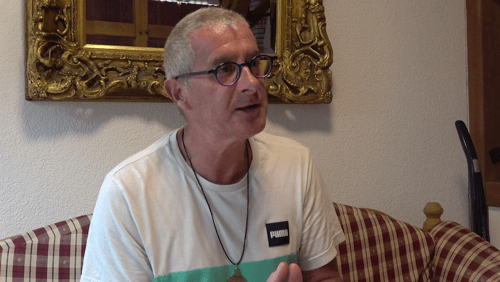
Keller (Betroffener und Angehöriger, Sohn)
At the time of the interview, Mr Keller was 60 years old, married and the father of two adult children. His life story has been profoundly shaped by a severe traumatic brain injury he sustained in a car accident at the age of 23. After coming out of a coma, he awoke feeling deeply exhausted, with difficulty concentrating and completely dependent on others. This period was emotionally draining for him – he lost his zest for life and his relationship at the time, and had to relearn basic skills. A turning point in his life was meeting his current wife, through whom he found a new purpose in life. In the decades that followed, he immersed himself in the study of brain function, which was not only part of his personal healing process but also led to a strong commitment to the cause. Today, Mr Keller is involved in an organisation for people with brain injuries. There, he draws on his own experiences and, among other things, organises a Nordic walking group that helps those affected to remain physically active and maintain social contacts. Another life-changing event was his father’s stroke in 2020 – in the midst of the COVID-19 pandemic lockdown. Despite the visiting restrictions in place, Mr Keller decided to support his father using all his own experiences. He visited him regularly and actively helped with his mobility – for example, with the transition from a wheelchair to walking. At the time of the interview, his father, now 88 years old, was living in his own flat again, albeit with certain limitations. The interview with Mr Keller took place at his home in 2023.
VIDEO
Helplessness and feeling overwhelmed
Mr Keller describes how his closest relatives feel overwhelmed, particularly when they are unable to make sense of the situation.
Video Interview
TRANSCRIPT
Related experiences
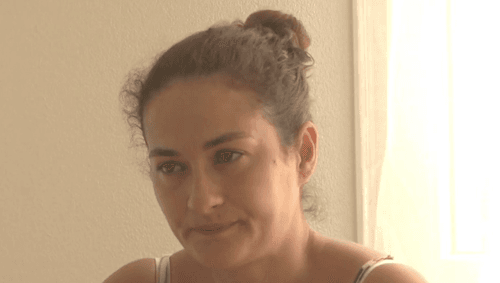
Soldo (Angehörige, Tochter)
Ms. Soldo lives in a spiral of grief
As a result of the decisions made, Ms. Soldo feels partly responsible for her mother's condition in need of care. She moves between the sadness of seeing her mother in the condition and the guilty conscience when there are moments of happiness in her life.
Impact for loved-ones

Gerber (Angehöriger, Sohn)
Anger, sadness and helplessness are close together
The sudden death of his father makes Mr. Gerber very angry. As a farmer, he was forced to continue his long working day despite the grief. He found visits very stressful during this time.
Impact for loved-ones
Other experiences by Keller (Betroffener und Angehöriger, Sohn)
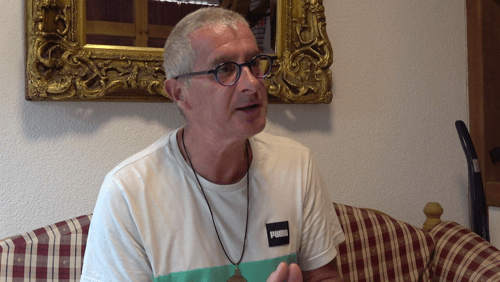
Keller (Betroffener und Angehöriger, Sohn)
At the time of the interview, Mr Keller was 60 years old, married and the father of two adult children. His life story has been profoundly shaped by a severe traumatic brain injury he sustained in a car accident at the age of 23. After coming out of a coma, he awoke feeling deeply exhausted, with difficulty concentrating and completely dependent on others. This period was emotionally draining for him – he lost his zest for life and his relationship at the time, and had to relearn basic skills. A turning point in his life was meeting his current wife, through whom he found a new purpose in life. In the decades that followed, he immersed himself in the study of brain function, which was not only part of his personal healing process but also led to a strong commitment to the cause. Today, Mr Keller is involved in an organisation for people with brain injuries. There, he draws on his own experiences and, among other things, organises a Nordic walking group that helps those affected to remain physically active and maintain social contacts. Another life-changing event was his father’s stroke in 2020 – in the midst of the COVID-19 pandemic lockdown. Despite the visiting restrictions in place, Mr Keller decided to support his father using all his own experiences. He visited him regularly and actively helped with his mobility – for example, with the transition from a wheelchair to walking. At the time of the interview, his father, now 88 years old, was living in his own flat again, albeit with certain limitations. The interview with Mr Keller took place at his home in 2023.
Keller (Betroffener und Angehöriger, Sohn)
“There you’re a baby”
Mr Keller describes waking from a coma as a process of gradual reorientation, accompanied by overwhelming fatigue. In his account, he alternates between periods of perceived functionality and moments of profound helplessness. A striking feature is the shift between the first and second person singular in his account, which can be interpreted as an indication that the experience was so emotionally distressing that it seemed almost unbearable for the individual. This shift in perspective can be interpreted as an expression of inner detachment and psychological defence mechanisms.
Procedure after brain damage
Brain damage
Keller (Betroffener und Angehöriger, Sohn)
Mr Keller was granted special permission
During the pandemic, Mr Keller went out of his way to support his father in person at the rehabilitation clinic, despite the ban on visitors.
Procedure after brain damage
Brain damage
Keller (Betroffener und Angehöriger, Sohn)
You have to identify and nurture people’s abilities
Mr Keller is a strong advocate for better integration of people with disabilities into the workplace. His statement highlights the social importance of inclusion and points to the need to further improve existing support services.
Procedure after brain damage
Brain damage
Keller (Betroffener und Angehöriger, Sohn)
“It was a success for me. I was able to be there”
Mr Keller describes how important it is to him, as a family member, to play an active role in medical discussions. To ensure he is well prepared, he actively acquires knowledge on relevant topics. When the situation calls for it, he also advocates for special arrangements, such as permission to visit during the pandemic.
Decision-making
Brain damage
Keller (Betroffener und Angehöriger, Sohn)
Mr Keller would like to have a doctor as designated point of contact
Mr Keller emphasises how important it is to him that a doctor oversees the entire recovery process.
Decision-making
Brain damage
Keller (Betroffener und Angehöriger, Sohn)
"You have to reckon with a different person"
In a conversation with his mother, Mr Keller prepares her for the possibility that her husband’s personality may change following his stroke. He wants her to be prepared for the fact that certain aspects of his character will no longer be the same as they used to be.
Identity
Brain damage
Keller (Betroffener und Angehöriger, Sohn)
Mr Keller sees his progress
Mr Keller now looks back on his life with a positive outlook. He can see everything he has achieved. One example: he is able to give this interview. For him, this shows just how much progress has been possible in recent years. During the conversation, it becomes clear that he has given a great deal of thought to the changes in his brain. Today, he wants to use his experiences and knowledge to help others.
Lessons and strategies
Brain damage
Keller (Betroffener und Angehöriger, Sohn)
Sharing experiences and building knowledge
Mr Keller feels empowered when he realises that his experiences are helping others. That is why he set up two support groups for people affected by brain injuries. At the same time, he helped his father regain his independence. Over the years, he has acquired a comprehensive understanding of brain injuries.
Lessons and strategies
Brain damage
Keller (Betroffener und Angehöriger, Sohn)
Safety when training on your own
After his father had a stroke, he took him Nordic walking regularly. After a while, his father was able to go into the woods on his own again. However, Mr Keller wants to make sure that his father can be reached whilst out and about, so that he can call for help in an emergency.
Lessons and strategies
Brain damage
Keller (Betroffener und Angehöriger, Sohn)
I’m needed now
When his father had a stroke, he took charge
Impact for loved-ones
Brain damage
Keller (Betroffener und Angehöriger, Sohn)
Helplessness and feeling overwhelmed
Mr Keller describes how his closest relatives feel overwhelmed, particularly when they are unable to make sense of the situation.
Impact for loved-ones
Brain damage
Keller (Betroffener und Angehöriger, Sohn)
Emotional ups and downs
Mr Keller talks about the emotional ups and downs he experienced following his traumatic brain injury. This period was marked by suicide attempts, his rehabilitation, the breakdown of his relationship at the time, and his return to work. Today, he knows that any brain injury can have psychological consequences.
Challenges after brain damage
Brain damage
Keller (Betroffener und Angehöriger, Sohn)
"I feel more alert today"
Mr Keller has studied brain injuries and their consequences in depth. Some 30 years after his accident, he says he feels ‘more alert’ because new neural connections have formed.
Challenges after brain damage
Brain damage
© 2000-2021, All Rights Reserved