
Ester O.
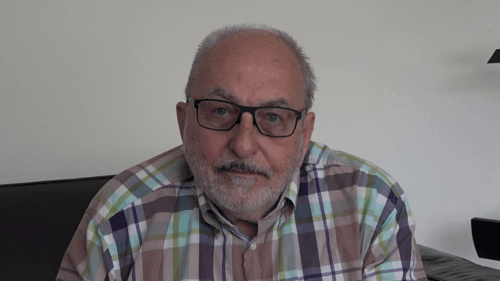
Ester O.'s husband has Parkinson's disease. Everyday life in the family becomes increasingly difficult as her husband's illness progresses. Above all, hallucinations, aggression and impulse control disorders cause difficulties. In the meantime, Ester O.'s husband lives in a nursing home. Age at the time of the interview: 64
TEXT
Too much regulation
Esther O.'s husband is no longer allowed to operate the control unit himself because he regulates it too high.
TRANSCRIPT
Related experiences
Other experiences by Ester O.
Ester O.
Ester O.'s husband has Parkinson's disease. Everyday life in the family becomes increasingly difficult as her husband's illness progresses. Above all, hallucinations, aggression and impulse control disorders cause difficulties. In the meantime, Ester O.'s husband lives in a nursing home. Age at the time of the interview: 64
Ester O.
Difficulties with fine motor skills
Esther O. notices that her husband also has difficulties with the cutlery.
Diagnosis
Parkinson's disease: deep brain stimulation and duodopa pump
Ester O.
Worry
Ester O. did not notice at first that her husband had developed a drinking problem.
Living with Parkinson's disease
Parkinson's disease: deep brain stimulation and duodopa pump
Ester O.
Aggressionen
Depending on the setting, Esther O.'s husband became more aggressive.
Treatment with Deep Brain Stimulation
Parkinson's disease: deep brain stimulation and duodopa pump
Ester O.
Too much regulation
Esther O.'s husband is no longer allowed to operate the control unit himself because he regulates it too high.
Treatment with Deep Brain Stimulation
Parkinson's disease: deep brain stimulation and duodopa pump
© 2000-2021, All Rights Reserved