
Roswitha S.
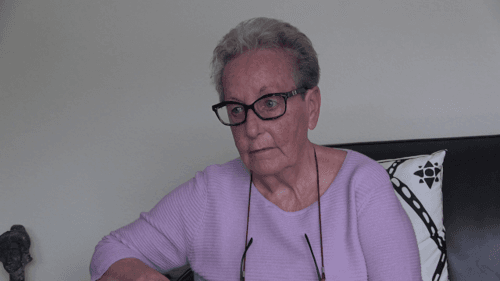
Roswitha S. notices from small changes that something has changed in her, but cannot interpret the symptoms. In 2004, she was diagnosed with Parkinson's disease and started a square dance class with her husband shortly afterwards. She finds the dancing extremely helpful in relation to the Parkinson's disease. At the time of the interview, she had been living with the disease for sixteen years. In 2017, she started Deep Brain Stimulation therapy. In the time before treatment, she was very unwell and sees Deep Brain Stimulation as a last resort. At the time of the interview, the surgery was seven years ago. Even before receiving the diagnosis of Parkinson's disease, Roswitha S. had quit her job as a biology teacher. Age at the time of diagnosis: 52 Treatment: Deep brain stimulation
TEXT
Explain oneself
Roswitha S. addresses her illness when she has the impression that others are wondering what is wrong with her.
TRANSCRIPT
Other experiences by Roswitha S.
Roswitha S.
Roswitha S. notices from small changes that something has changed in her, but cannot interpret the symptoms. In 2004, she was diagnosed with Parkinson's disease and started a square dance class with her husband shortly afterwards. She finds the dancing extremely helpful in relation to the Parkinson's disease. At the time of the interview, she had been living with the disease for sixteen years. In 2017, she started Deep Brain Stimulation therapy. In the time before treatment, she was very unwell and sees Deep Brain Stimulation as a last resort. At the time of the interview, the surgery was seven years ago. Even before receiving the diagnosis of Parkinson's disease, Roswitha S. had quit her job as a biology teacher. Age at the time of diagnosis: 52 Treatment: Deep brain stimulation
Roswitha S.
Changes on the eye
Roswitha S. tells of changes in her eye that cause her to make mistakes when writing.
Diagnosis
Parkinson's disease: deep brain stimulation and duodopa pump
Roswitha S.
Explain oneself
Roswitha S. addresses her illness when she has the impression that others are wondering what is wrong with her.
Family and society
Parkinson's disease: deep brain stimulation and duodopa pump
Roswitha S.
Waning effect
Roswitha S. is doing very well at first, then the effect of the medication suddenly wears off.
Medication
Parkinson's disease: deep brain stimulation and duodopa pump
Roswitha S.
Second opinion
Roswitha S. seeks a second opinion.
Treatment with Deep Brain Stimulation
Parkinson's disease: deep brain stimulation and duodopa pump
Roswitha S.
No choice
Roswitha S. reports that she was very unwell before the operation.
Treatment with Deep Brain Stimulation
Parkinson's disease: deep brain stimulation and duodopa pump
Roswitha S.
Effort
For Roswitha T., the operation is psychologically exhausting because of the long duration.
Treatment with Deep Brain Stimulation
Parkinson's disease: deep brain stimulation and duodopa pump
Roswitha S.
Nightmares
Roswitha S. has nightmares after the operation.
Treatment with Deep Brain Stimulation
Parkinson's disease: deep brain stimulation and duodopa pump
Roswitha S.
Anxiety
Roswitha S. tells how she got scared during the operation and calmed herself down.
Treatment with Deep Brain Stimulation
Parkinson's disease: deep brain stimulation and duodopa pump
© 2000-2021, All Rights Reserved